
history
Ed Zolna, founder of Mailbox Books and Second Ed, passes away
Posted by earthfurst on Tue 17 Jun 2025 - 22:18 We're sad to report that Ed Zolna passed away on November 4, 2024.
To most new participants in Furry Fandom, that's not a name that will mean anything. Ed played a vital and largely unique role in the 80s and 90s of the fandom, before the Internet kicked in, and consequently didn't leave much of a digital footprint. He's most known as the founder of two furry mail-order distribution businesses.
The first was Mailbox Books in 1987. There were a lot of furry fan-made zines, art folios and comics being produced, but the fandom had no obvious center nor common area in which to find them, so that's where Ed's mail-order business came in, based out of his home in Roslyn, PA. By 1995 his catalog was a 40-page booklet.
Furtannia: The History of the Furry Fandom in the United Kingdom
Posted by Grubbs Grizzly on Thu 29 Jun 2023 - 14:52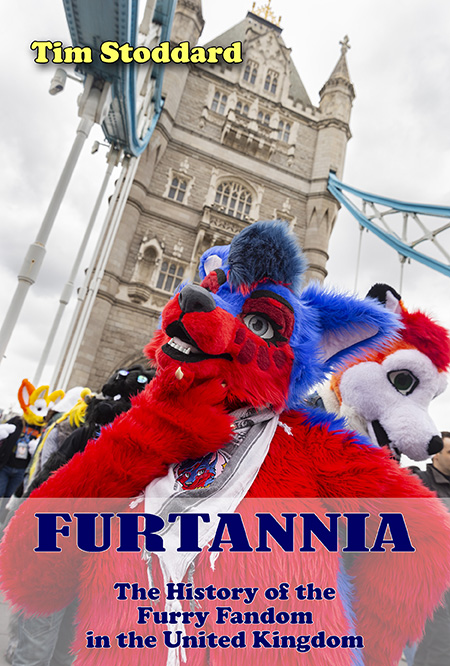
British furry Tim "Gamepopper" Stoddard has released his new book, Furtannia: The History of the Furry Fandom (Barnes & Noble US, Amazon UK) in the United Kingdom (Uncle Bear Publishing, 2023).
This well-researched book was written by Stoddard after many furries asked him whether he had written a book related to his history talks he has given at ConFuzzled. The resulting tome covers everything you wanted to know about furries in the UK. The book covers the following elements:
- How early British children's literature influenced the fandom.
- The rise of house parties and conventions such as ConFuzzled and Scotiacon.
- Information about key figures in the British fandom such as Simon Barber and Ian Curtis.
- A tour of the successes and failures of various cons.
- The connections between the U.S. and U.K. furs.
- Relates how the media have received and portrayed the fandom over the years.
Furries and internet worry of history erasure as Twitter and Google announce plans to close inactive accounts
Posted by Sonious on Fri 19 May 2023 - 09:39Google has recently announced its intention to deactivate accounts if the user is inactive after two years of time. This comes only a week after Twitter had announced that they too will be looking to liquidate accounts that lack activity. Soon after this announcement the accounts of deceased on Twitter were found to be suspended for “Terms of Use Violations”, in a similar vein to someone who used the site to spam or harass others.
Dying, as it turns out, is against the rules.
Furry fandom featured in academic journal written by culture PhD student, who's a furry
Posted by Sonious on Thu 24 Mar 2022 - 17:54An article surrounding the content of furry fandom, written by a furry university of Texas PhD Student, has been published in the journal of Transformative Works and Cultures. The peer-reviewed journal covers media and fan communities under a variety of mediums. Written by Charlie the Wuff, Furry fandom, aesthetics, and the potential in new objects of fannish interest references many prior non-fiction totems such as: Ash Coyote’s The Fandom: A Furry Documentary, Joe Strike’s Furry Nation, and Fred Patten’s Furry Fandom Conventions 1989-2015.
The three parts of the work go over the foundations of the fandom proper in the 1970s, followed by a dive into the aesthetic of the medium, and finishes with the cultural aspects that make the fandom distinct from other fan groups.
Art Spiegelman's Maus: A Timely Appreciation
Posted by StratoKasta on Mon 31 Jan 2022 - 20:13I was just going to sit on this particular entry until a later time, since Maus is a novel I rather grew up with, having discovered it in college. Current events have ratcheted my schedule up to today. See the details in Sonious' article.
As such, Maus is also the latest example in a long line of important literature to see censorship such as To Kill a Mockingbird, 1984, or even The Lorax. Like any of those other examples, the motivation for this censorship grays in contrast to the social and cultural impact the work has.
The story re-imagines the memoirs of a Holocaust survivor, through the anthropomorphic template of Jewish mice suffering at the paws of SS cats. The involved plot revolves around main character Artie and his tight-knit neighborhood of survivors, as they reflect on the horrors of the past. Of course, the weight of these events is more than enough to color their relatively safe present. Much of the novel does indeed read like a Jewish Historical Society compendium, and does not skimp an iota on content of the dire situation they survived.
Remembering Ian Curtis (1946-2021) - A founding father of the British furry fandom
Posted by gamepopper on Sun 19 Sep 2021 - 19:32 Ian George Stuart Curtis passed away some time in May of 2021. He was one of the founding fathers of the furry fandom in the UK.
Born in December 1946 in Hull, he grew up on Disney cartoons and funny animal comics like Bonzo the Dog and Rupert Bear. By the time he was in his teens, he also developed interests in wargaming, comics, science fiction and fantasy games as well.
While working as a writer for the military press, he travelled to the USA regularly and used his leisure time to frequent the comic book and science fiction conventions there. This was how he met early furry fans like Pauli Kidd and discovered furry fandom. By the 1990s, he was in contact with fans in the US, Australia, and the UK.
How naughty Fursuit allegations led to EMTs getting screwed in one New Jersey town
Posted by Sonious on Thu 26 Aug 2021 - 13:43John Oliver once again shows off his suspiciously furry stylings of comedy in one of his recent segments. In this case, he compared Brussel's EMT siren sound to Mickey getting ‘spin-cycled’, yes a euphemism for intercourse, on a washing machine. He even went so far as to get a motion-tweened animation of the affair. This joke is what he used to bookend his discussion around EMTs, and America’s underfunding and vulture-like privatization of them.
But what the writers of this particular segment may not have been aware of, is that while Mickey getting plowed on a washing machine may seem like a perfect ice breaking non-sequitur to the tragic state the United States' emergency services find themselves in, for furries it’s a bit too real.
In the year 2012, in the town of West Windsor, New Jersey, a seemingly innocent annual gathering of fursuiters supporting a local emergency services group called the Twin W Rescue Squad became targeted by politicians after allegations of indecent acts of a “spin cycle” style were spread through the press.
So thanks to Mr. Oliver, I feel compelled to go over what may be one of the most unfortunate interactions between furries and the political wardens of our country. And how the incident still sends ripples of fear and concern to this very day on the rules of engagement when it comes to fursuiting for organizations in the United States’ Northeast.
Mozilla, Firefox, Doge and… a squirrel?
Posted by GreenReaper on Sat 27 Feb 2021 - 11:05
Mozilla has been forced to state that the increasingly-stylized fox in their browser logo is "alive and well" — despite mounting evidence of Doge influence in Nightly, the twice-a-day distribution of Firefox code.
Their blog post was a response to a series of memes decrying the ongoing march towards minimalism, implying that a 2019 re-branding exercise – in which Firefox was turned into a 'parent brand' composed of a 'swoop' design from which the browser icon and others were derived – represented elimination of the fox from the product.
Party Animals: How American politicians got their fursonas
Posted by 2cross2affliction on Sat 17 Oct 2020 - 12:28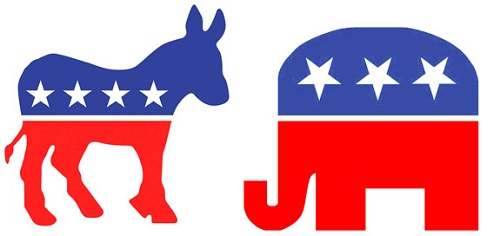
Early next month, Americans will vote for various political offices, including President of the United States, the U.S.'s head of state. This is usually considered a pretty big deal in America, and even the world in general, as America still manages to wield a lot of political, economic and even cultural power on the world stage, despite itself. Some of the idiosyncrasies of the American political system may be a bit opaque to non-Americans (no, we don't really understand what the Electoral College is supposed to accomplish anymore, either). One aspect that seems to be uniquely American is the strong identification of American political parties with certain animals.
In memoriam: Fred Patten (1940-2018)
Posted by dronon on Sat 17 Nov 2018 - 10:05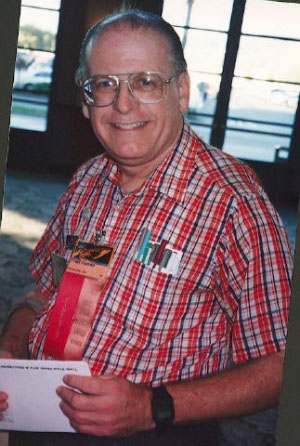 Fred Patten was born in Los Angeles, California on December 11, 1940. By the time he was ten years old, he'd become interested in science fiction and had started to collect SF books and magazines. From 1958 to 1963 he attended UCLA, where he graduated with a master's degree in Library Science. During his university years, he discovered science fiction fandom, joined the Los Angeles Science Fantasy Society (LASFS), and started to write for fanzines.
In the 1970s, Fred became a partner in a bookstore in Long Beach, and also developed an interest in manga and anime from Japan. In 1977, along with Mark Merlino and others, Fred was one of the founding members of North America's first anime fan club, the Cartoon/Fantasy Organization. Partially through the C/FO, he and Mark expanded their mutual interest in animals in cartoons and science-fiction, which was a major step in the early evolution of furry fandom. A lot people aren't aware that in North America, both anime and furry fandoms share an originating root!
Remembering Fred Patten
Posted by SylysSable on Fri 16 Nov 2018 - 22:43 There is a balding man with glasses, standing in the corner, cradling a book against his stomach, reading. You saw him a lot. At the Los Angeles Science Fantasy Society meeting hall, the APA collation room, in the library, at science fiction conventions in function rooms and room parties, at San Diego Comic Con in the Rowrbrazzle contributor parties, at furry parties.
His name is Fred Patten, and was in no way the passive participant he seemed. With a partner he opened a book shop in Long Beach, California that not only carried SF and Fantasy books, but comics from all over the world. He reviewed SF and Fantasy literature for fan and professional publications. His apartment was literally wall-to-wall books. He collected SF/F art, storing paintings in his bed frame. I don't think anyone knew where he slept... or if he did.
Review: 'Furry Nation' by Joe Strike
Posted by Rakuen Growlithe on Sun 11 Mar 2018 - 16:48
If you do not know where you come from, then you don't know where you are, and if you don't know where you are, then you don't know where you're going. And if you don't know where you're going, you're probably going wrong.
—Terry Pratchett
I am probably not wrong in my belief that many furs have little idea of how the fandom got started. The furry fandom is based around the appreciation of, and I'll simplify here, anthropomorphic characters. Furs find their way here through that appreciation and are able to join in immediately. This is not a bad thing but it is sad that many of us are unaware of our shared history. As we learned above, if we don't know where we come from then we are lost.
It's not that there has been no attempt to describe the origins of the furry fandom; aside from the crowdsourced wikis (e.g. WikiFur), we had Fred Patten's Retrospective: An Illustrated Chronology of Furry Fandom, 1966–1996 and Perri Rhoades' The Furry History Project. The first is not necessarily in the most easy to use form and both of the latter entries are chronological lists of major influences. Joe Strike's book departs from this format, employing a mix of personal anecdotes, extensive research and several interviews with prominent furs to build a far more flowing, narrative history of the furry fandom.
Furrydelphia: Philly's fourth bite at the furry apple
Posted by GreenReaper on Tue 22 Aug 2017 - 12:34Philly Metro's "Inside Philly's first furries convention" offers a compelling summary of our fandom's latest (and quite successful) convention. But its title betrays a lack of research. While Drayne and his team are to be congratulated for bringing a new furry convention to the City of Brotherly Love, it is by no means the  first… nor even the largest furry con held there.
The first honour belongs to Furtasticon, chaired in November 1994 by Trish Ny – which was also furry fandom's second convention, spun up in the space of a few months, allegedly after perceived
Then there's Furstivus, which drew 238 – organized by SkippyFox and friends on short notice to replace 2012's New Year's Furry Ball. One must also consider the giant next door, Anthrocon.
Rat.org: the original fan repository returns
Posted by RingtailedFox on Sun 6 Aug 2017 - 20:40 After a 20-year hiatus, Rat.org has returned, at least as a read-only museum. Few today may remember it, but for some fans it was their first furry Web repository, and a launching point or inspiration for many other sites.
Rat.org was founded by Kilorat in the ancient stone-age year of 1994 as a combination Sonic the Hedgehog and Swat Kats: The Radical Squadron fansite. Later a Gargoyles section would be added as it grew in popularity.
This was the first home for many artists and fanfic writers, launched before Windows 95 came out (most used Mac OS 7.5.x or Windows for Workgroups 3.11 to connect with dial-up), and before giants such as Yahoo!, GeoCities, deviantART, and Fanfiction.net took over.
The website was hosted on a humble 80386DX with a "gigantic" 500 MB hard drive co-located at MV Communications – the first ISP in New Hampshire, where Kilorat was working. Despite being one of the only sources for fan materials on the Internet [compare S'A'Alis' Avatar Archive], the server was able to handle the low levels of traffic of the day.
Update (August 2018): The domain name has been sold, and all links updated to kilorat.com.
Furry fanzines, comics and furry history
Posted by Ahmar Wolf on Sun 11 Jun 2017 - 14:01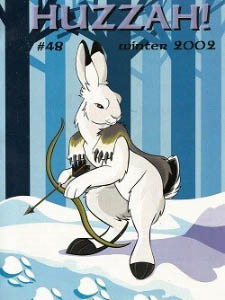 With $40 that I sent to a collector, I dove into the interesting pool of furry fanzines. Anyone can publish furry art and comics online these days, but back when the Internet was more BBS than WWW, it seems like any artist who wanted to get their name out there did a fanzine. There are an incredible number of them, and that's why in my opinion it's impossible to list them all. I know some have tried and failed.
"Bestiary", "Scrap", "Karno's Klassics", "Furplay" and "PentMouse" are just a very small number of what was out there. The quality of the art ranges widely, and so far I've come across more than one comic that makes absolutely no sense at all. But those are exceptions; most of what I've seen has been quite good.
For the most part, furry fanzines were published with anywhere between 8 to 50 pages. They're a really interesting view of the early days of the fandom. One thing I noticed - the style of art hasn't changed that much. But what has definitely changed is how furry fans have viewed their fandom.