
science
Dispelling a misconception: Non-human animals as intelligent, cultured and moral beings
Posted by Rakuen Growlithe on Sat 16 Aug 2025 - 14:01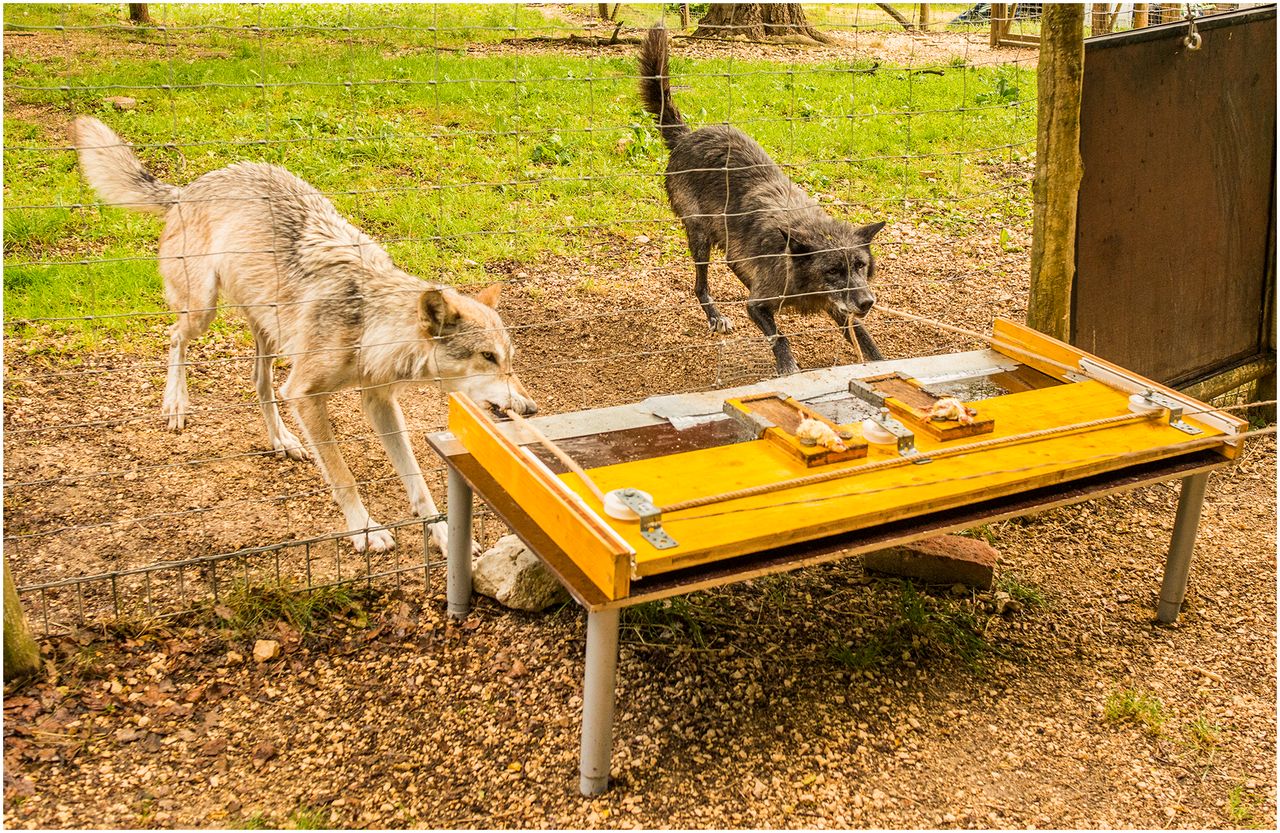
There are countless accounts and videos of animals doing amazing things and demonstrating great intelligence. However, we can never be sure if those are representative examples of animal behaviour or just once-off events. Furthermore, those are interpreted through untrained eyes and may not actually show a behaviour that people think it does. To try to avoid these issues, my goal here is to primarily rely on peer-reviewed scientific literature, ideally that which is publicly-available, but presented in a way that can be understood by all. To distinguish between scientific references and ordinary links, links to scientific sources are presented in the format [Author, year] based on academic referencing conventions.
New study provides neural evidence that dogs visualise words as humans do
Posted by Rakuen Growlithe on Sun 7 Apr 2024 - 11:13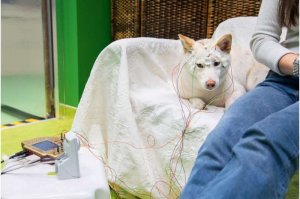 People have long wished to talk to animals and this desire is reflected in cultural objects such as Arthur C. Clarke's novel Dolphin Island. One well-known example of an animal "learning" human language was the horse Clever Hans, who was later shown to be responding to cues from his handler rather than actually understanding. Cases of poorly-controlled claims, like Clever Hans, and speciest notions of human uniqueness have hindered development of the field. However, the wish to communicate through language has remained and many animals have been claimed to use or understand human languages, including dogs.
The rough road to animal personhood
Posted by Rakuen Growlithe on Sat 27 Nov 2021 - 00:37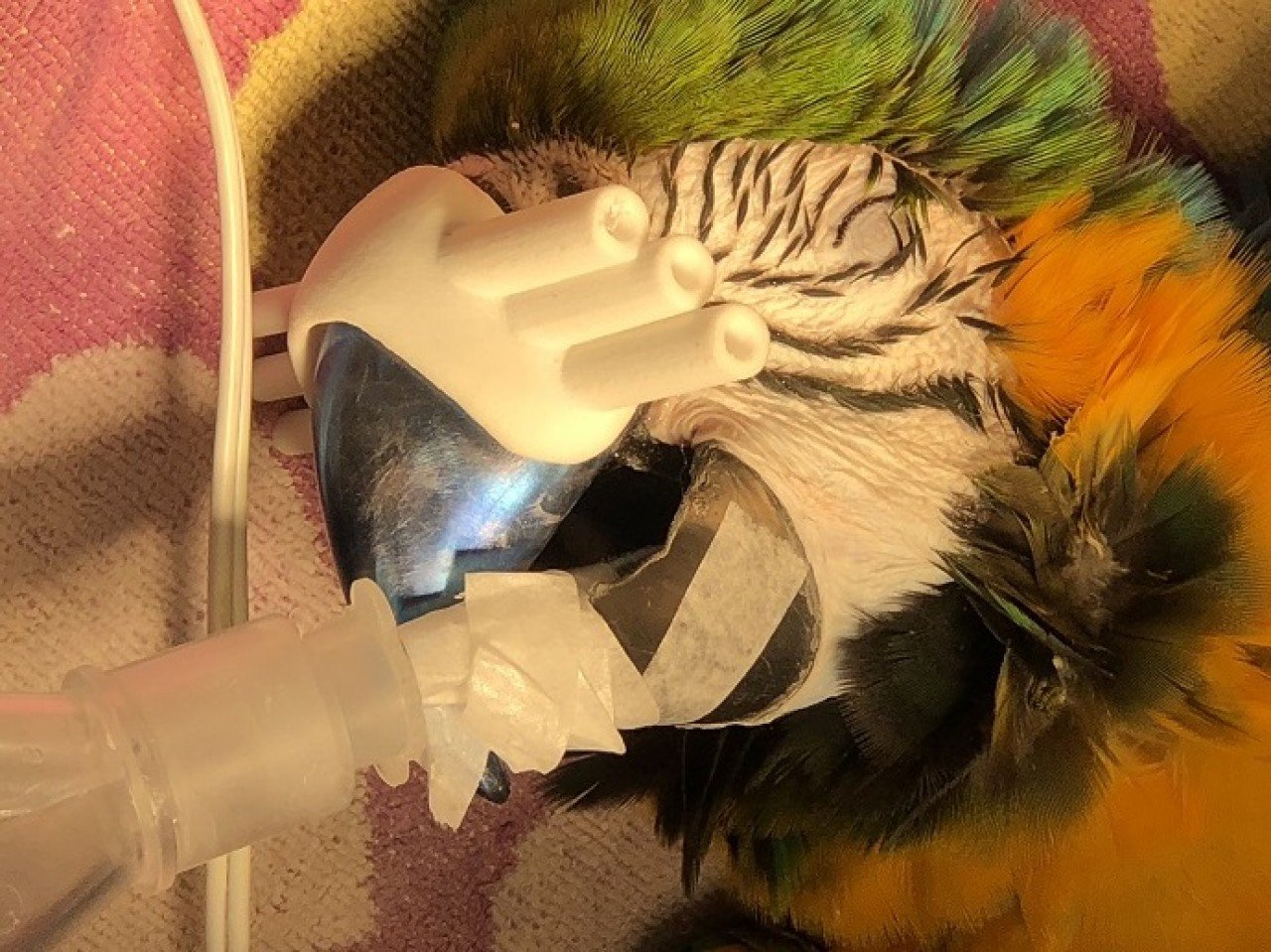
In search of a long-term solution, a South African team of veterinarians, doctors and other professionals led by Prof. Gerhard Steenkamp worked together to design and attach a 3D-printed beak for Max. As has been previously covered on Flayrah, many other animals have also received prosthetics when they've needed them.
Studies show animals have more cognitive and emotional lives than humans believe
Posted by Rakuen Growlithe on Thu 9 Jul 2020 - 07:23A recent study conducted at Harvard University (scientific paper) to examine working visual memory found that an African grey parrot was able to outperform 6-8-year-old human children. That might not be so amazing on its own — research has already shown various bird species to perform on par with human children — if it weren't for the third group in the comparison. The parrot also performed equally or better than a group of 18-30-year-old undergraduate students in 12/14 trials.
Concerns over conduct of Northwestern sexology researcher
Posted by jm on Mon 4 May 2015 - 20:24 Kevin Hsu is a sexology researcher based at Northwestern University on the outskirts of Chicago. In 2013 he sought, and received, approval from the Northwestern Institution Review Board (IRB) – an ethics committee that oversees research with human subjects – to study furries.
Hsu's research is intended to follow work published by Dr. Anne Lawrence in 2009, which references furries as a group possibly displaying a hypothetical phenomenon associated with fetishistic behaviour named "Erotic Target Location Error". Hsu's hypothesis is that many furries – possibly most – are zoophiles, where that attraction manifests as the furry identity and in activities such as fursuiting, and that furries can therefore be classified as "autozoophiles".
What's most surprising about Canada's $75,000 grant to the ARP to study furries?
Posted by GreenReaper on Sat 8 Jun 2013 - 03:29Furry con surveyed on porn, fantasy, pets, politics & bronies
Posted by GreenReaper on Sun 26 May 2013 - 16:59 Results have been released from an Anthropomorphic Research Project survey of 455 furs taken at Furry Fiesta 2013.
- 78% of females and 96% of males report viewing furry porn. Both groups underestimated both figures by 8-12%.
- Increasing furriness indicated a tendency to use fantasy for various purposes, including escapism, but didn't indicate blurring of reality, or an inability to have fun, self-motivate, fulfil needs, socialize, or cope with problems without fantasy.
- Female furs had less sexual roleplay, owned less pornography, viewed it less frequently, and felt it had less influence on their joining the fandom. They also saw pornography as more openly discussed within the fandom.
- Furries overestimated the positivity of both male and female furs towards furry porn: males tended to be positive or mixed, while over 20% of females had a negative view. 51% of furs preferred porn over general furry artwork; 17% had the opposite view. ~55% saw non-furry pornography in a negative light; some males only view furry porn.
- Non-brony furs rated bronies less positively (50) than furries (79) or non-furs (61).
- Furries are very liberal on social matters, but more moderate on economic topics.
- Therians anthropomorphise animals more than non-therian furs; those strongly identifying as furries gave human characteristics to both regular and stuffed animals.
Around half of those participating chose to join the group's three-year longitudinal study.
On [adjective][species]: JM revisits Dr. Gerbasi's original study – Nuka responds
A famous experiment in anthropomorphism and psychology
Posted by Patch Packrat on Tue 5 Mar 2013 - 18:23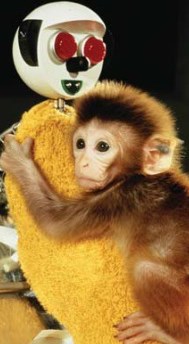 Sorry to interrupt fun stories about comics and cartoons, but the Anthropomorphic Research Project story suggests some want to know what furryness means. Let me throw in a topic sharing an abstract concept with the fandom.
Anthropomorphism is often imagined from our human point of view (attaching human characteristics to something non-human). But the concept can exist apart from ourselves, when animals see themselves in objects. The way it works for them can reveal more about us.
Harry Harlow was a psychologist who experimented with monkeys. In the 1950's and 60's, he gave his subjects "surrogate" mothers built from different objects, to see how they would behave, and learn about care-giving and companionship in social and cognitive development. PBS says about his famous experiment:
He took infant monkeys away from their real mothers, giving them instead two artificial mothers, one model made of wire and the other made of cloth. The wire model was outfitted with a bottle to feed the baby monkey. But the babies rarely stayed with the wire model longer than it took to get the necessary food. They clearly preferred cuddling with the softer cloth model, especially if they were scared. (When the cloth model had the bottle, they didn't go to the wire model at all.)
Animation: 'Science Fare'
Posted by Fred on Mon 10 Dec 2012 - 02:47Cartoon Brew has posted a sample of “Mike Carlo’s Cartoon Madness” to illustrate the Titmouse, Inc. animator’s personal short films. The 3’52” “Science Fare” was pitched to Nickelodeon a year ago. I guess that it did not sell.
The CB’s Jerry Beck says of Carlo's animation,
These are very polished, professional cartoons that look as good – and are just as funny – as anything on Adult Swim or Comedy Central. I predict he’ll be running his own show very soon.
I don’t care for the Adult Swim or Comedy Central style of animation, but “Science Fare” certainly is anthropomorphic.
U.S. government petitioned to drop drug war, create cat girls
Posted by Rakuen Growlithe on Sun 9 Dec 2012 - 06:48 The U.S. administration created We The People to provide a place for any of its citizens to petition the White House, which has promised to provide an official response to all petitions reaching 25?000 signatures within 30 days. While some cover serious political issues, it's doubtful that they expected Matthew H's petition for domestic cat girls. [Yahoo!]
Matthew contends that the War on Drugs is pointless, and that money would be better spent by genetically engineering cat girls for home services.
While reports by the Global Commission on Drug Policy suggest the war has been a dramatic and costly waste of money, lives and society, and has harmed the fight against HIV/AIDS, it is unlikely that the U.S. will abandon it any time soon. Both Colorado and Washington have legalised non-medicinal marijuana, but its possession is still a federal offence.
'The Boy Who Cried Wolf' updated by automatic sheep collars
Posted by Fred on Tue 7 Aug 2012 - 21:52Wired reports that Swiss scientists are trying to develop a sheep collar that will notify shepherds when wolves attack their sheep, and will release a chemical deterrent.
Corvids reveal highly-developed communication abilities
Posted by Rakuen Growlithe on Fri 2 Dec 2011 - 13:23When people think of the most intelligent animals other than humans, the first contenders are the dolphins and great apes. A less-obvious one may be birds of the family Corvidae, containing both crows and ravens. This was suggested when researchers at Oxford found crows are able to make specific tools, a feat never before seen in other animals.
More recently, ravens have been shown to direct other individuals' attention through gestural communication; the first time this has been seen outside of the primates. In primates, such gestures are rarely seen in the wild. Why wild ravens show this behaviour more commonly is unknown, but it is thought by some to be the foundation of language.
UK researchers urge limits on human-animal research
Posted by GreenReaper on Fri 22 Jul 2011 - 10:17British medical researchers are calling for tighter regulation on research involving animals with human tissue or genes, while cautiously approving some experiments, the BBC reports.
Professor Christopher Shaw highlighted objectionable 'category three' experiments such as:
- the mixing of non-human primate and human cells to make an embryo
- the mixing of human and non-human gametes (reproductive cells)
- the replacement of monkey brain cells with human ones to gain human characteristics
Dr Robin Lovell-Badge suggested a gap between fantasy and reality:
Everyone laughs at talking meerkats and cats with opposable thumbs, but if we were actually doing that in the labs I don't think people would be so happy.
Read: Animals containing human material (synopsis) – Exploring the boundaries (evaluation)
Dolphins show both tool use and culture
Posted by Rakuen Growlithe on Thu 21 Jul 2011 - 08:55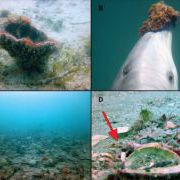
A: Basket sponge
B: Dolphin wearing sponge
C: Debris on the sea bed
D: Hidden fish
Researchers in Shark Bay, Australia have identified tool use and cultural transmission of the tool use in dolphins.
The scientists observed some dolphins occasionally pulling basket sponges from the sea bed and using them to cover their snouts as they foraged for food on the sea bed. The sponges presumably provided them protection from the rocks and shells on the sea bed. However, it wasn't known why the dolphins bothered to forage there.
The research team now report that dolphins perform this activity to catch fish living under the sand's surface.
Are snow leopards more populous than tigers?
Posted by Fred on Thu 14 Jul 2011 - 21:52A photoarticle in Wired.com says there are an estimated 4,500 to 7,500 wild snow leopards left in the Central Asian mountains. This is more than the number of tigers left in the wild, which is estimated to be only about 3,200.
See also: BBC tracks down tigers in the Himalayas - Chinese wineries farm tigers for bones